
Materials
When it comes to materials, three things really matter: good-quality clay, a few sculpting tools, X-Acto knife, and a circle template for shaping joints. These are worth investing in - everything else is helpful, but not essential.
If you're on a budget, put your money toward the clay. Tools and other supplies can be as basic and inexpensive as you like; they won't make or break your results the way clay quality will.
I'll share links to my favorite materials throughout the course, but these are just what works for me - feel free to use whatever you have on hand or can source locally, as long as it fits the core requirements above.
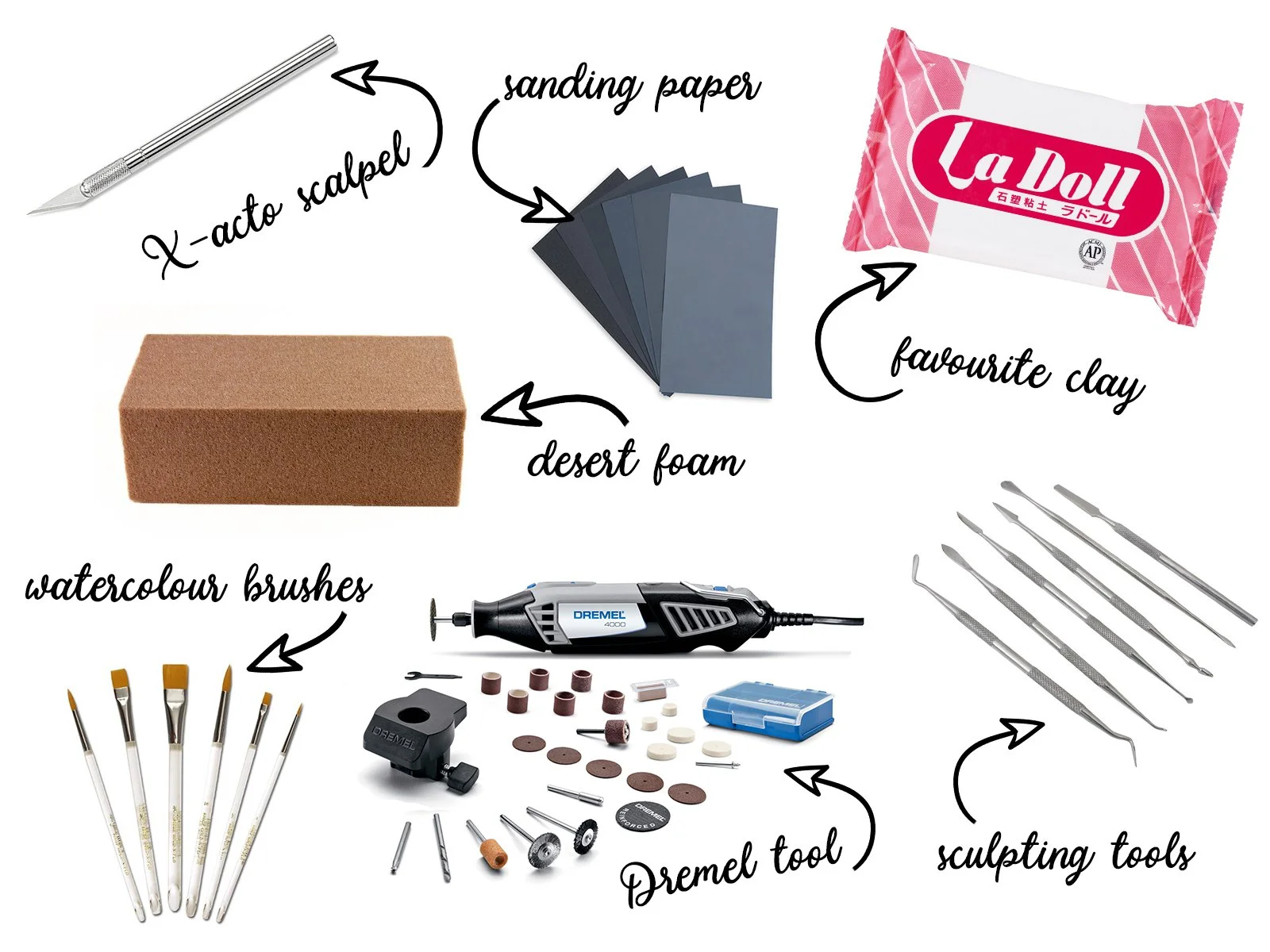
Clay - In this tutorial, I'm using La Doll air-dry clay. My other choices would be La Doll Premix or Premier.
Sculpting tools - I like to use an assortment of metal sculpting tools; you can use them for carving as well.
Circle template - very useful for shaping balls for joints and drawing joints in the blueprint.
Florist desert foam or aluminum foil - to make a base that we'll remove later and hollow out the doll.
Sanding paper - it's good to have a variety of sanding papers from more coarse ones to very fine ones. Some of them will be useful to sand rough areas and remove imperfections; others will be great for polishing at the last stages of making your doll.
Watercolour brushes - you'll need just a few. A small round brush for sculpting and a flat one for smoothing the surface. I have a few techniques where sculpting with a brush is way easier than with a sculpting tool!
X-Acto knife - for cutting and carving the clay.
Dremel tool - not essential but makes the doll making a lot easier. If you plan to create more ball-jointed dolls, I suggest investing in one. If it's just one-time sculpting curiosity, you'll do just fine with hand tools. There will be a few sections at the very end where you'll need to drill holes. But the clay is quite soft, so you can drill and carve it successfully using just the drill bits.
PVA glue - we'll be cutting some pieces apart and then gluing them back together. Simple PVA white glue works really well with air-dry clays.
Paper (masking) tape/washi tape - there are a few steps where you might need masking tape, but it's not essential.
Rubber bands - it's quite useful to have some on hand for holding the BJD pieces together.
Spray primer - I'm using Mr. Surfacer 1200 spray primer. But I've had good results with grey primer used for cars as well! This primer evens out small imperfections and prepares for casting the doll. If you won't be casting your BJD and will leave it as is, you can use white primer.